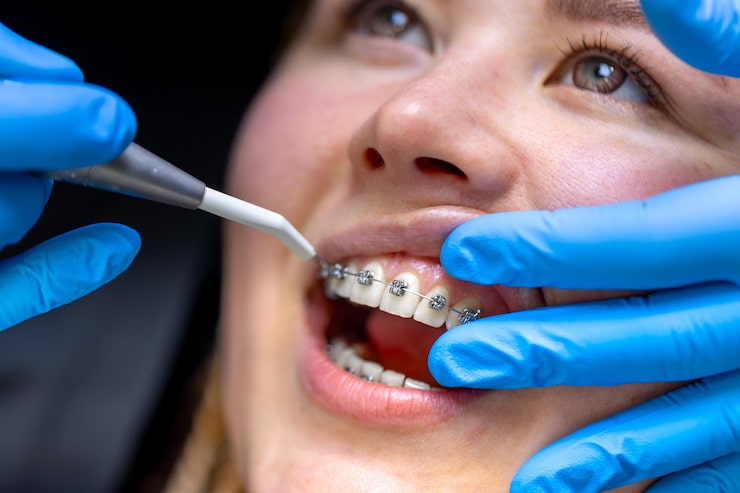
Most people think crooked teeth are just a looks problem—something that only affects how your smile appears in photos. But that is not the full picture. Teeth that are out of place can affect how you chew your food, how clearly you speak, and even how much pain you feel in your jaw or head every day. Knowing when to visit a dentist office near you or see an orthodontist can make a real difference—not just for your smile, but for how you feel every single day.
What Does Teeth Alignment Mean?
Teeth alignment simply means how your teeth sit in your mouth — and how they line up with each other.
When everything is in the right place, your upper and lower teeth meet evenly when you bite down. Your teeth have enough room to sit comfortably without pushing against each other. Your jaw closes easily without any strain or discomfort.
When something is off — even just a little — it can start a chain of problems that goes far beyond how your smile looks.
Crooked Teeth Symptoms to Watch For
Many people live with crooked teeth symptoms for years without realizing that their alignment is the actual cause.
Here are signs that something may not be quite right:
- Teeth that overlap, twist, or bunch together
- One tooth that sticks out more than the ones beside it
- Gaps between teeth that look uneven or too wide
- Trouble biting into food — especially anything hard or crunchy
- Food gets stuck in the same spots every time you eat
- Difficulty reaching certain teeth properly when brushing or flossing
- A feeling that your top and bottom teeth do not meet evenly
- A clicking or popping sound in your jaw when you eat or yawn
Some of these are easy to spot in a mirror. Others are things you feel but may not immediately connect to your teeth being out of alignment.
Misaligned Bite Problems You Should Not Ignore
A misaligned bite simply means your top and bottom teeth do not come together the way they should.
Misaligned bite problems put extra pressure on certain teeth and jaw joints every time you eat or chew. Over time, that pressure builds up and causes pain, wear, and damage that gets worse little by little.
Here are the most common types of bite problems and what they mean:
| Type of Bite Issue | What It Looks Like | Problems It Can Cause |
| Overbite | The top front teeth cover too much of the bottom ones | Jaw pain, worn lower teeth, speech issues |
| Underbite | Bottom teeth sit in front of the top teeth | Difficulty chewing, jaw strain, facial unevenness |
| Crossbite | Some top teeth sit behind the bottom teeth | Uneven jaw growth, gum recession, and tooth wear |
| Open bite | The top and bottom front teeth do not touch when biting | Trouble biting food, speech problems |
| Crowding | Teeth overlap because there is not enough room | Hard to clean properly, higher risk of cavities |
| Spacing | Gaps between teeth | Food getting trapped, gum irritation, and shifting teeth |
Any of these is worth getting looked at by a dental professional.
How Alignment Problems Can Affect the Rest of Your Body
This is something that surprises a lot of people, but it is very real.
When your teeth are not lined up properly, the effects do not stay in your mouth. They can travel to other parts of your body in ways that are easy to miss at first.
Here is what misaligned teeth can lead to over time:
- Jaw pain and jaw joint problems — Uneven biting puts strain on the joints that move your jaw
- Regular headaches — Jaw tension from a bad bite often causes headaches that come back again and again
- Higher risk of gum disease — Crowded teeth are harder to clean, so plaque builds up in places your brush cannot reach
- Teeth wearing down faster — Teeth that hit each other the wrong way grind against each other over time
- Digestion problems — If you cannot chew your food properly, your stomach has to work harder
- Trouble sleeping — Some bite problems cause mouth breathing at night, which disrupts sleep
These are real, everyday problems that affect how you feel — and orthodontic treatment gets to the root cause of all of them.
When Is It Time to See an Orthodontist?
Booking a visit with an orthodontist near you is the right move when alignment concerns keep coming back or start affecting your daily life.
You should make an appointment if:
- Your dentist has mentioned crowding, gaps, or a bite issue during a routine visit
- You have jaw pain, clicking sounds, or headaches that have no clear explanation
- You find it hard to brush or floss certain areas of your mouth properly
- You feel uncomfortable or self-conscious about how your teeth look
- Your child has baby teeth that fell out too early or adult teeth coming in at odd angles
- You have noticed your teeth slowly shifting position over time
The earlier these problems are spotted and treated, the simpler and more effective the treatment usually is.
What Treatment Options Are Available?
Orthodontic treatment today is much more comfortable and far less noticeable than it used to be.
Here are the most common options:
- Metal braces — The most well-known option. Very effective for complex alignment and bite problems
- Ceramic braces — Work just like metal braces, but use tooth-colored brackets that blend in much better
- Clear aligners — Removable, nearly invisible plastic trays that gently move your teeth step by step
- Retainers — Worn after treatment is finished to keep teeth in their new, corrected position
Your orthodontist will look at your specific situation and recommend the option that gives you the best result in the most comfortable way possible.
Does Age Matter for Orthodontic Treatment?
Not as much as most people think.
Children can be assessed as early as age seven. This does not always mean treatment starts right away, but it gives the dentist a chance to spot developing problems before they become more serious. Catching things early often means simpler treatment later on.
Adults can absolutely get orthodontic treatment too. Teeth keep shifting throughout life, and it is never too late to fix something that has been bothering you for years. Many adults are surprised to learn how straightforward treatment can be.
Your Smile Is Telling You Something
If you found yourself nodding along to several of the signs in this blog, that is your body giving you a clear message.
Teeth alignment problems almost never fix themselves. They tend to get worse slowly and quietly over time until the discomfort becomes too hard to ignore. Acting early is always the smarter and easier choice.
At Smile 101, the team provides warmth and experience and focuses on making every patient feel comfortable and understood. Whether you are a parent worried about your child’s teeth, an adult who has been putting this off for years, or simply someone who wants answers, the right place to start is one honest conversation.
Reach out to us today and take the first step toward a smile that feels just as good as it looks.
Frequently Asked Questions
At what age should my child first see an orthodontist?
Most orthodontists recommend bringing your child to the dentist for a check-up at around the age of seven to catch any developing issues early.
Will teeth alignment problems get worse if left untreated?
Yes, most alignment problems slowly get worse over time and can lead to bigger dental issues if ignored.
Is orthodontic treatment only about making teeth look better?
No, it also improves how you chew, how easy it is to clean your teeth, and how comfortable your jaw feels.
How long does orthodontic treatment usually take?
Most patients finish treatment within 12 to 24 months, depending on how complex their case is.