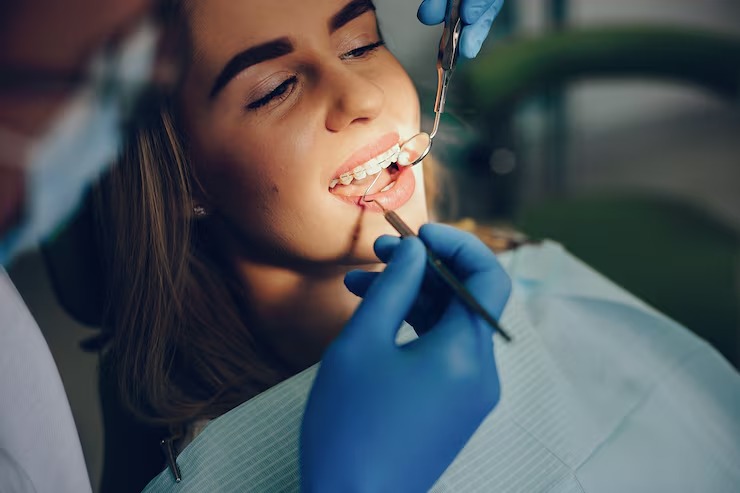
Many people with alignment problems want to improve how their teeth look and function. Crooked teeth, crowding, and bite problems can affect oral health and confidence. Speaking with a dentist in Hunters Creek can help patients understand which orthodontic treatment may work best for their specific situation.
Braces and clear aligners are two common treatments used to correct alignment issues. Both options are designed to move teeth into better positions gradually. However, when it comes to severe alignment concerns, the treatment approach may differ depending on the condition of the teeth and bite.
How Braces Work For Severe Alignment Problems
Traditional braces have been used for many years to correct complex orthodontic issues. They use brackets and wires that apply steady pressure to move teeth over time. Braces are often recommended for more complicated alignment problems.
Braces can help address several types of orthodontic concerns.
- Severe crowding of teeth
- Large gaps between teeth
- Bite problems such as overbite or underbite
- Teeth that are rotated or positioned incorrectly
The wires connected to the brackets are adjusted during regular visits. These adjustments help guide teeth into their proper position. Braces in Hunters Creek are often recommended when teeth require more controlled movement over a longer period.
How Clear Aligners Work
Clear aligners are removable trays made from transparent plastic. These trays are designed to shift teeth into better alignment gradually. Patients wear a series of aligners that are changed every few weeks as the teeth move.
Clear aligners work best in certain situations.
- Mild to moderate alignment issues
- Small gaps between teeth
- Minor crowding
- Slight bite corrections
Because the trays are removable, patients can take them out while eating and brushing their teeth. However, aligners require consistent wear to be effective.
Braces Vs Clear Aligners For Severe Cases
Both treatments aim to move teeth into proper alignment. However, their effectiveness can vary when dealing with severe orthodontic conditions.
Looking at the key differences can help patients understand how each option works.
| Treatment Factor | Braces | Clear Aligners |
| Ability to treat severe crowding | Often effective for complex cases | May be limited for severe crowding |
| Control over tooth movement | Allows precise control using wires and brackets | Movement depends on aligner design |
| Treatment for complex bite issues | Often used to correct major bite problems | May not work well for severe bite issues |
| Visibility | Brackets and wires can be seen | Clear trays are less noticeable |
| Removal | Fixed on the teeth during treatment | Can be removed while eating and cleaning teeth |
This comparison helps patients understand braces vs clear aligners for severe cases. Each treatment works differently depending on the complexity of the alignment issue.
Effectiveness Of Braces Vs Aligners
Both braces and aligners are designed to straighten teeth over time. The main difference lies in how they control tooth movement. Braces are generally considered more effective for severe alignment problems.
Several factors influence the effectiveness of braces vs aligners.
- The severity of crowding or misalignment
- The presence of bite problems
- Patient consistency with wearing aligners
- The overall treatment plan recommended by the dentist
For severe orthodontic issues, braces often provide more precise control. This allows the dentist to guide teeth more carefully throughout treatment. Aligners may still be suitable for many patients, but complex cases may require traditional braces.
Choosing The Right Treatment Option
Every orthodontic case is different. What works well for one patient may not be the best option for another. A proper dental examination helps determine the best treatment plan.
Several factors may influence the choice between braces and aligners.
- The severity of the alignment issue
- The condition of the bite
- Patient lifestyle and preferences
- Long-term treatment goals
A professional evaluation can help determine which treatment option will produce the most stable and effective results. Orthodontic care focuses not only on improving appearance but also on supporting long-term oral health.
Start Your Orthodontic Journey With Trusted Care
If you are considering orthodontic treatment, we at Smile 101 can help you explore your options. A consultation can help determine the most suitable approach for your alignment needs. Schedule a visit to our dental office to discuss the treatment options available for your smile.
Frequently Asked Questions
Can clear aligners fix severe alignment issues?
Clear aligners may help with some alignment problems, but severe crowding or complex bite issues may require braces for better control.
How long does orthodontic treatment usually take?
Treatment time varies depending on the severity of the alignment problem. Many orthodontic treatments take between one and three years.
Are braces more effective than clear aligners?
Braces are often considered more effective for severe orthodontic cases because they allow more precise control over tooth movement.
Are clear aligners more comfortable than braces?
Many patients find clear aligners comfortable because they do not use wires or brackets, but comfort can vary from person to person.